
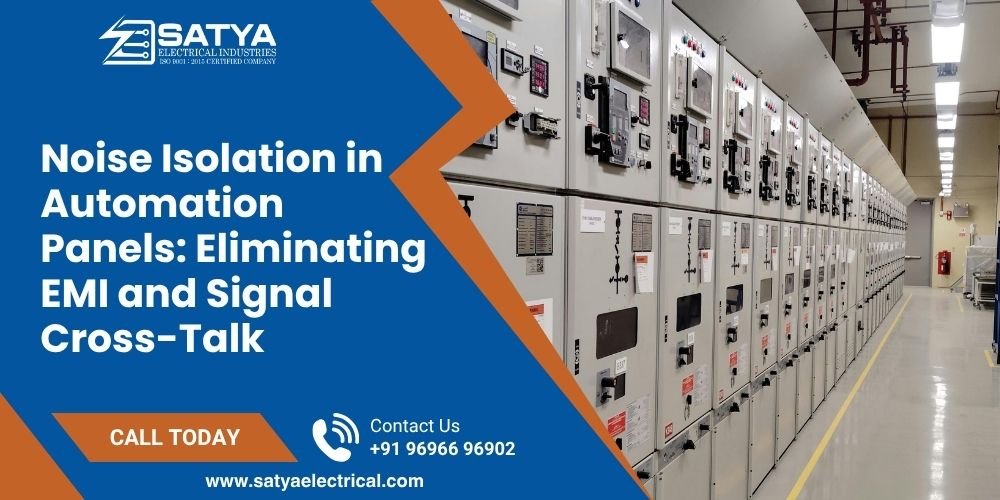
In the race to maximize factory efficiency, modern industrial control layouts are more compact than ever. Industrial enclosures regularly house high-frequency power switching devices right next to sensitive microprocessors, programmable logic controllers (PLCs), and weak analog sensor loops.
While a high-power VFD Panel optimizes motor speeds, its internal high-frequency switching circuits generate a massive byproduct: Electromagnetic Interference (EMI) and Radio Frequency Interference (RFI).
If your panel architecture lacks proper structural isolation, this electrical noise bleeds directly into nearby control wiring. The result? Ghost faults, erratic sensor readings, scrambling PLC communication networks, and sudden operational shutdowns that can take days to diagnose.
The Anatomy of Interference: How Noise Crosses Over
For electrical noise to disrupt an automation panel, three elements must exist: a noise source (the VFD or power switchgear), a victim circuit (the PLC or analog sensor line), and a coupling path.
In industrial enclosures, this coupling primarily happens in two ways:
- Inductive & Capacitive Coupling (Cross-Talk): When high-voltage power cables run parallel and tightly bundled alongside low-voltage signal cables, electromagnetic fields cross the air gap, inducing noise currents directly into the sensitive signal paths.
- Conducted Interference: High-frequency noise travels back through shared power lines or grounding buses, bypassing digital filtering systems and directly corrupting the power supplies of automated controllers.
Critical Panel Layout Guidelines for Noise Isolation
To build an unyielding defense against EMI, panel designers must transition from simple space saving to systematic Zonal Isolation inside the enclosure.
| Panel Layout Zone | Equipment Contained | Cable Routing Protocol | Isolation Requirement |
|---|---|---|---|
| Zone 1: High Power | Main incoming lines, MCCB Panels, line reactors, VFD inputs. | Heavy unshielded 3-phase lines. | Top or bottom corner; maximum distance from digital cards. |
| Zone 2: Switching | VFD outputs, servo drives, contactors, Switch Fuse Units. | Shielded power cables. | Enclosed with dedicated internal metal partitions. |
| Zone 3: Low Voltage | PLCs, I/O modules, communication gateways, HMI links. | Twisted-pair, shielded data lines. | Minimum 200mm air clearance from Zone 1 & 2 tracks. |
Structural Engineering Protocols to Prevent EMI/RFI
==============================================================
     |  [ High-Power Zone ]               [ Low-Voltage Zone ]    |
     |  - Incoming Feeders                - PLC & I/O Modules     |
     |  - VFD Rectifiers                  - Comm Gateways         |
     |          |                                   |             |
     |     (Power Cable)                       (Signal Cable)     |
     |          |                                   |             |
     |          \/                                  \/            |
     |  [ Solid Steel Raceway ]           [ Perforated Raceway ]  |
     |  =======================           ======================  |
     |  :::::::::::::::::::: Isolated Ground Bus ::::::::::::::::: |
     ==============================================================
1. Utilizing Solid-Wall Metallic Cable Raceways
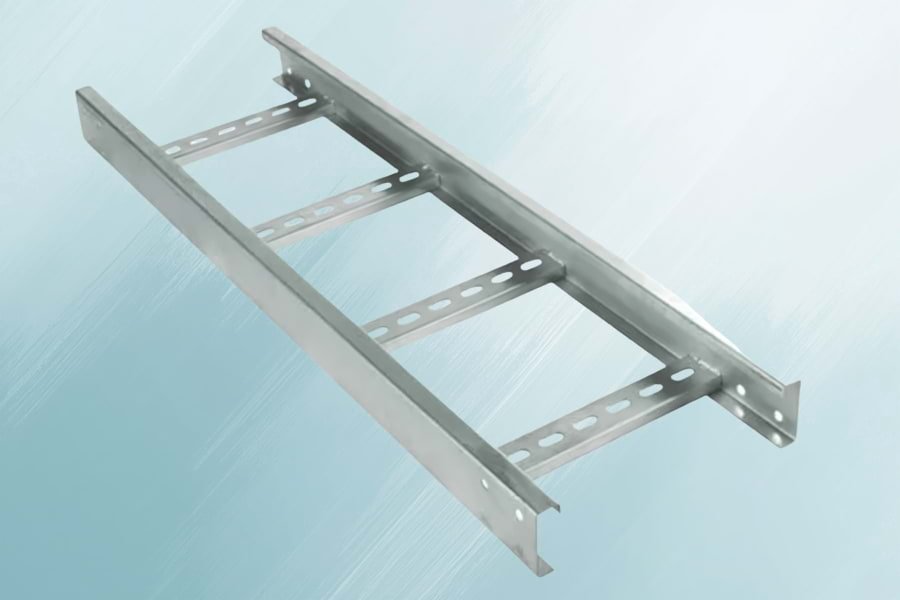
Inside the control panel, power and signal lines should never occupy the same duct. Power lines must be routed through solid metal barriers or specialized Raceway Cable Trays acting as grounded Faraday cages. If a power conduit and a control line must intersect, they must cross at a strict 90-degree angle to minimize the electromagnetic surface overlap.
2. Establishing a Low-Impedance Grounding Plane
3. Continuous Shield Bond Continuity
When routing shielded motor cables from the drive to the field, stripping away the shield too early or running it through a long ground wire creates an inductive antenna that leaks noise. Shield braids must be secured directly to the grounded backplate using heavy-duty, 360-degree grounding clamps right at the entry point of the Control Panel Enclosure.
Filter Positioning Rule: When installing active harmonic filters or line reactors to suppress drive noise, always position the filter as physically close to the VFD input lugs as possible. Allowing filtered lines to run long distances through the panel enclosure lets them re-absorb stray electromagnetic fields, rendering the noise filter ineffective.
Deploy Precision-Engineered, Noise-Isolated Control Automation
Designing stable industrial automation hubs requires meticulous, component-level engineering and deep field experience. Cutting corners on internal spacing, shielding ground accessories, or partition layouts leaves your critical production lines exposed to constant control errors.
At Satya Electrical, we design and manufacture high-integrity VFD Panels, PLC Enclosures, and Heavy-Duty Industrial Control Assemblies engineered with strict structural zonal separation to guarantee flawless automated operation.
Looking for a Reliable Electric Panel Manufacturer?
Contact our automation panel cell today to request an engineering consultation or secure an analytical quote for your custom layout designs.

 Users Today : 4
 Users This Month : 104
 Total Users : 1317