
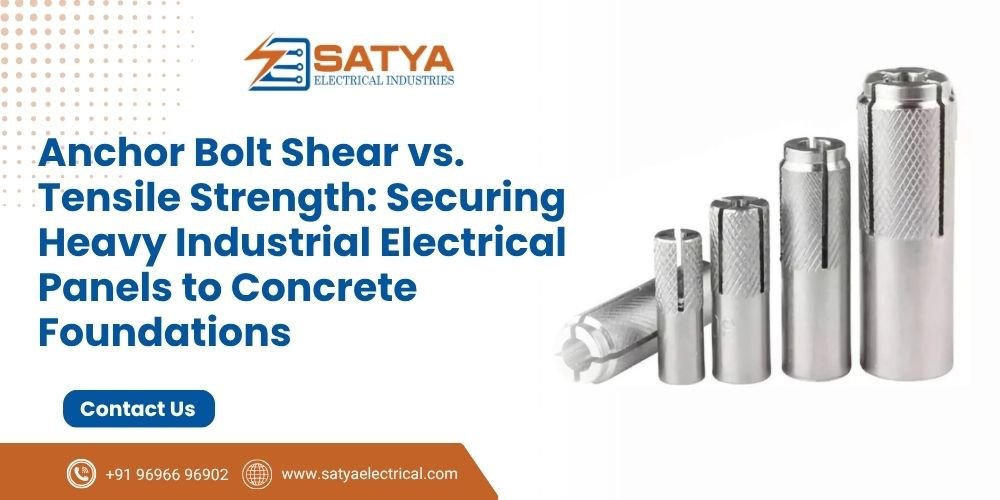
When planning a massive industrial facility upgrade, immense engineering focus is poured into short-circuit kA ratings, busbar current densities, and sheet metal IP classifications. Yet, the physical connection that binds these heavy, high-voltage assets to the earth is frequently overlooked: the concrete foundation anchoring system.
A fully populated Feeder Section Panel or a multi-drive VFD Panel can easily weigh anywhere from hundreds of kilograms to several tons. If these tall, top-heavy enclosures are secured with substandard hardware or incorrect sizing metrics, minor facility tremors, nearby machine vibrations, or heavy door-swing leverage can pull the anchors clean out of the concrete substrate.
To prevent tipping, structural misalignment, and catastrophic busbar short-circuits, installation crews must design anchoring frameworks based on strict mechanical force vectors: Tensile Strength and Shear Strength.
Mechanical Force Dynamics: Tensile vs. Shear Loading
When an electrical enclosure is anchored to a factory floor, the anchor bolts must resist two distinct physical forces acting upon them simultaneously:
- Tensile Strength (Pull-Out Force): This is the anchor’s resistance to forces acting parallel to the bolt shank, attempting to pull the fastener straight upward out of its drilled hole. In electrical installations, tension is primarily created by the overturning moment—the leverage applied at the base when an engineer opens a heavy, wide-swinging panel door, or during localized seismic shifts.
- Shear Strength (Lateral Force): This is the anchor’s resistance to forces acting perpendicular to the bolt shank, attempting to slice the fastener sideways at the concrete surface line. Shear forces are generated by horizontal impacts (such as a forklift bumping the base framework), cable tension pulling from overhead Ladder Trays, or structural shifting.
Critical Engineering Metrics for Foundation Anchoring
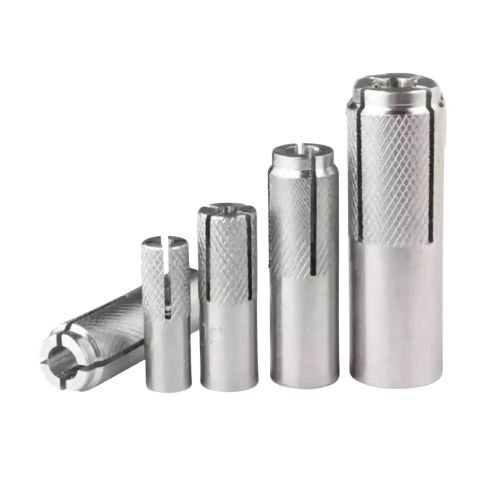
To avoid anchor failure, engineers must select fasteners manufactured from high-tensile carbon steel (such as Grade 8.8 or higher) rather than generic mild steel alternatives.
| Fastener Metric / Variable | Standard Expansion Anchor | High-Tensile Anchor Bullet Fastener |
| Material Steel Grade | Low Carbon Mild Steel (Grade 4.6) | High-Tensile Quenched & Tempered (Grade 8.8) |
| Ultimate Tensile Strength | ~400 N/mm2 | ~800 N/mm2 (Double the pull-out resistance) |
| Yield Strength Limit | ~240 N/mm2 | ~640 N/mm2(Resists permanent bending) |
| Primary Industrial Use Case | Light-duty indoor wall mount brackets | Heavy-duty floor anchoring for multi-ton panels |
Engineering Protocols for High-Vibration Floor Anchoring
1. Utilizing Heavy-Duty Base Channels
An electrical panel should never sit directly bare on raw concrete. The bottom frame must always be bolted down onto a structural grid composed of G.I. Slotted C Channels or heavy steel sections embedded into or anchored tightly onto the concrete plinth. The slots in the channel allow for minor installation adjustments while evenly distributing the downward load.
2. Calculating Minimum Edge Distance and Spacing
3. Combating Vibrational Loosening
Heavy machinery, stamp presses, and large compressors create continuous, low-frequency floor vibrations. Over time, these micro-shocks act like a wrench, slowly backing nuts off their threads. Every structural anchor must be locked down using an intentional hardware stacking order:
Concrete Surface → Base Channel → Thick Flat Steel Washer → Spring Locking Washer → High-Tensile Nut Bolt Washer Assembly
Site Installation Warning: Never reuse a drilled hole if an expansion anchor slips or fails to grip during initial torqueing. Abandon the hole, patch it with high-strength structural epoxy, and drill a fresh hole at a distance equal to at least 10 times the bolt diameter to ensure the integrity of the concrete substrate.
Secure Your Heavy Industrial Assets with Precision Hardware
Securing high-voltage power frameworks requires robust engineering from the copper busbars down to the foundational base bolts. Cutting corners on structural fasteners compromises the physical stability of your entire sub-station footprint.
At Satya Electrical, we manufacture and supply premium, high-tensile Anchor Bullet Fasteners, Hanging Threaded Rods, GI L Clamps, and Precision-Slotted C-Channels designed to withstand extreme industrial shear and tensile stresses.
Looking for a Reliable Electric Panel Manufacturer?
Connect with our structural fastening cell today to source bulk technical hardware or request structural loading specifications.

 Users Today : 3
 Users This Month : 103
 Total Users : 1316