
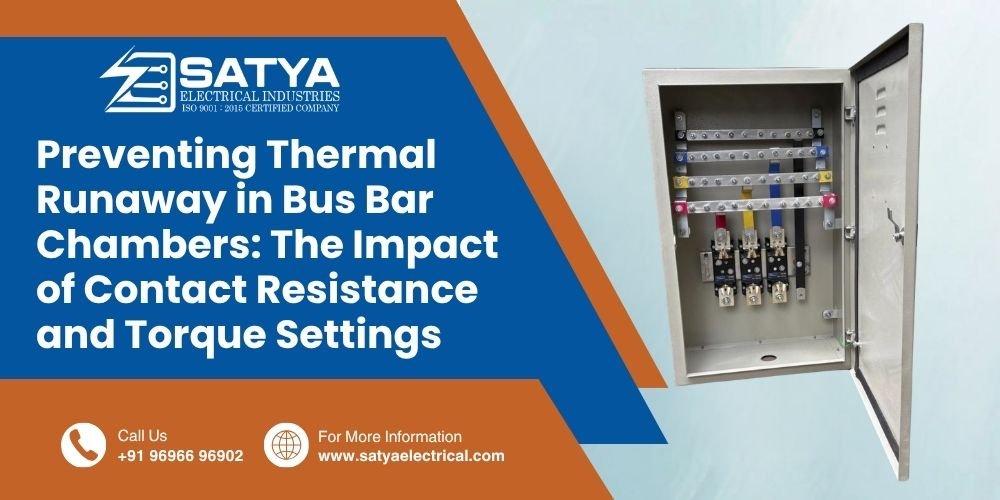
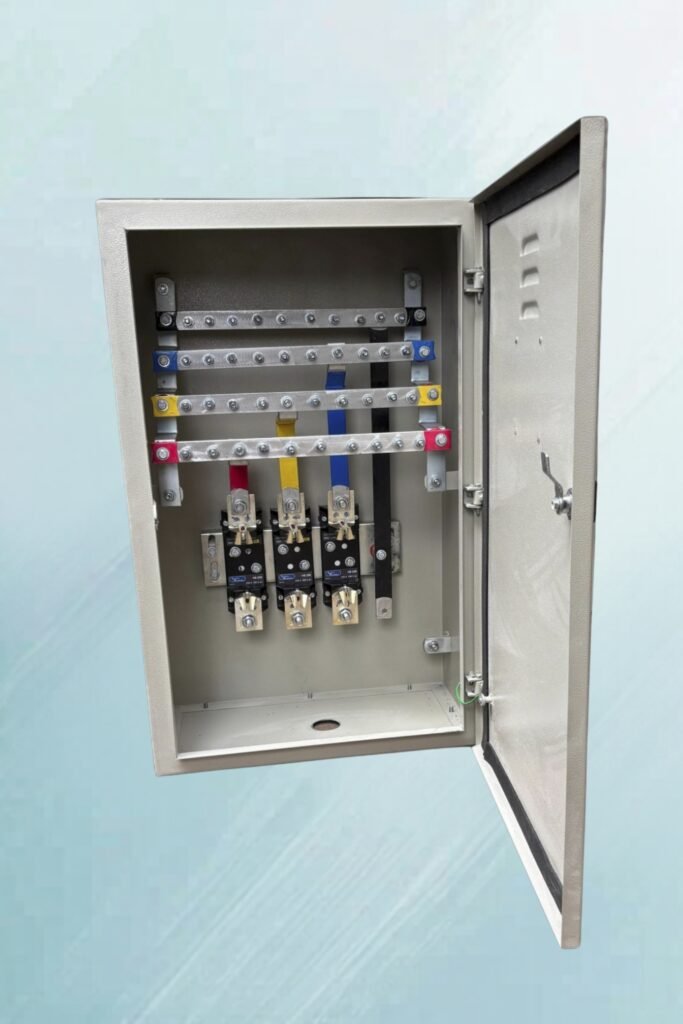
In large-scale industrial plants, main power distribution boards process thousands of amperes of electrical energy every single hour. At the center of this infrastructure sits the Bus Bar Chamber, which channels high-current main lines out into individual branch protection setups like Feeder Section Panels and MCCB Panels.
Because these solid copper or aluminum bars transport immense currents, the physical points where they intersect are highly vulnerable. If a joint loosens by even a fraction of a millimeter or experiences surface oxidation, it triggers a dangerous loop known as thermal runaway.
Left unchecked, this heat expansion loop melts insulation, warps structural enclosures, and can cause catastrophic arc-flash panel fires that completely stop factory production.
The Physics of Failure: How Loose Joints Cause Panel Fires
Thermal runaway does not happen instantly; it builds up quietly over months of cyclic factory loads. The engineering breakdown follows a predictable chemical and physical path:
Contact Loosening/Oxidation →↑ Contact Resistance(Rc) →↑ Localized Heat(I2R) → Accelerated Oxidation → Thermal Runaway
- Microscopic Gaps: No matter how smooth a manufactured copper bar looks, its surface has microscopic peaks and valleys. Current flows only through the true physical contact points where these peaks squeeze together.
- The Joule Heating Surge (I2R): If clamping pressure drops, the true contact area shrinks, causing localized Electrical Contact Resistance (Rc) to skyrocket. As current passes through this bottleneck, energy releases as intense heat.
- The Oxidation Feedback Loop: Copper oxidizes rapidly when temperatures cross 80°C. Copper oxide is a poor conductor; its presence drives contact resistance even higher, creating more heat until the entire joint glows red-hot and structural failure occurs.
Critical Engineering Metrics for Busbar Joint Integrity
To maintain a safe, fire-protected distribution board, your engineering and panel-building teams must track strict design parameters:
| Engineering Parameter | Electrolytic Grade Copper (Cu) | Electrical Grade Aluminum (Al) |
| Target Current Density | 1.2 A/mm2 to 1.6 A/mm2 | 0.8 A/mm2 to 1.0 A/mm2 |
| Max Safe Joint Temperature | 85°C (Under continuous peak load) | 85°C (Under continuous peak load) |
| Joint Hardware Material | Grade 8.8 High-Tensile Steel Fasteners | Grade 8.8 High-Tensile Steel Fasteners |
| Surface Finish Standard | Electro-tin plating or silver coating | Anti-oxidant paste application required |
Engineering Best Practices to Stop Joint Degradation
1. Utilizing Belleville (Spring) Washers
Copper and steel expand and contract at completely different rates when heated. When a panel heats up under peak load, a standard flat washer can crush into the copper bar, creating permanent deformation. When the system cools back down, a microscopic gap opens up.
Using conical Belleville Spring Washers solves this issue; they flex and flatten to absorb structural expansion while maintaining constant, even clamping pressure through heat cycles.
2. Strict Adherence to Torque Specifications
Busbar bolts must never be tightened by hand guessing. Under-tightening leaves high contact resistance, while over-tightening strips the threads or warps the washers. Maintenance crews must use calibrated torque wrenches to match exact mechanical guidelines (e.g., M10 bolts require roughly 40-45 Nm of torque; M12 bolts require 55-60 Nm).
3. Periodic Thermal Imaging (Infrared Thermography)
Because busbar failures start inside enclosed chambers, routine preventive checks are critical. Performing routine infrared thermography scans on open panel links reveals hidden hot spots instantly before they can turn into a critical plant breakdown.
Material Selection Rule: For highly corrosive industrial areas, like textile chemical processing units or fertilizer packaging plants, raw aluminum busbars tarnish and degrade far too quickly. Always insist on premium Electro-Tin Plated Electrolytic Grade Copper Busbars to preserve low contact resistance over decades of continuous service.
Build Dependable, High-Amperage Electrical Distribution Boards
Managing high-amperage power demands experienced, precision-vetted switchgear engineering. Cutting corners on material grades, current density calculations, or joint reinforcement accessories compromises your entire facility’s safety.
At Satya Electrical, we design and manufacture heavy-duty, low-loss Bus Bar Chambers, Main LT Panels, and Feeder Sections engineered with strict safety safety factor spaces and high-tensile hardware arrays.
Looking for a Reliable Electric Panel Manufacturer?
Reach out to our panel manufacturing cell today to request a technical layout quote or schedule an infrastructure upgrade review.

 Users Today : 3
 Users This Month : 103
 Total Users : 1316